How to Spot Exceptional Service at a Gin Bar NYC
New York has never lacked for places to get a drink. What it does lack, even now, is consistency. You can walk into a handsome room in Manhattan or Brooklyn, see a back bar lined with rare bottles, and still end up with a forgettable martini served by someone who knows less about gin than the guest ordering it. The reverse happens too. A modest, almost hidden bar can deliver a level of care that makes the entire night feel sharpened, calmer, and more deliberate.
That difference is what separates a place that merely sells spirits from a true Gin Bar NYC regulars return to. Exceptional service is not theater for its own sake. It is not a bartender reciting ten distillation facts while your drink warms on the bar. It is a blend of timing, product knowledge, hospitality, restraint, and situational awareness. You feel it before you can always name it.
If you care about gin, that standard matters even more. Gin is one of the most expressive spirits behind the bar. A London dry with taut juniper and citrus peel behaves differently than a contemporary gin built around cucumber, shiso, or floral botanicals. The glassware matters. The dilution matters. The temperature matters. The garnish matters more than many bars admit. Service, in a gin-focused setting, is not just friendliness. It is technical competence made to feel easy.
The first sign appears before the first sip
You can tell a lot in the first three minutes.
Watch what happens when you arrive. Are you acknowledged promptly, even if the bar is slammed? A simple eye contact and “I’ll be right with you” is enough. Strong service does not always mean immediate service. In a packed New York room at 7:30 p.m., that would be unrealistic. It means the staff can manage pressure without letting guests feel invisible.
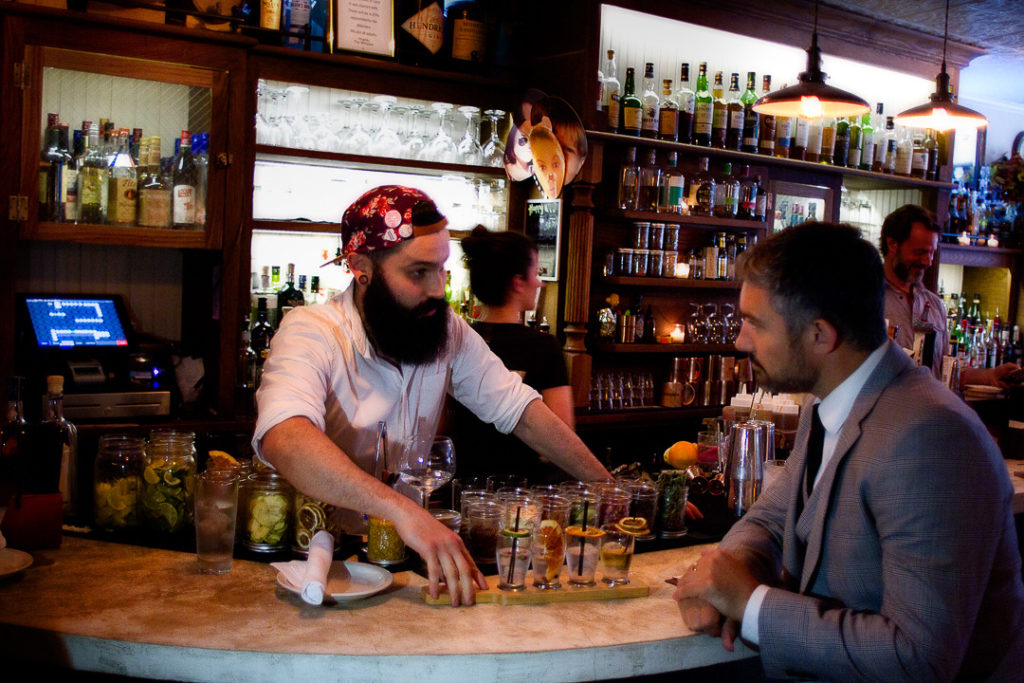
Then look at how the room moves. Exceptional bars have rhythm. Bartenders are not crashing into each other or shouting over simple tasks. The host, server, or bartender seems to know where each party belongs. Glassware is polished, the station is tight, and menus are available without a scavenger hunt. None of this is glamorous, but it is the foundation of trust. If the front end feels disorganized, the drinks often follow.
I have seen this play out many times. At one well-regarded gin bar downtown, the bartender noticed a couple hovering near the service well, gently redirected them to two seats that had just opened, dropped water within a minute, and gave them a quick read on the menu based on one question: “Do you usually like classic juniper-forward gin, or something softer?” That exchange took maybe 20 seconds. It told the guests, clearly, that they were in capable hands.
At a weaker bar, the opposite happened. A guest asked for a martini and was handed a menu without any guidance. Ten minutes later, after scanning a long gin list filled with brand names but no useful descriptions, he ordered blind. The drink arrived too warm and with a lemon twist so thick it dominated the nose. Nothing about it was disastrous. None of it was exceptional either.
Product knowledge should feel practical, not performative
A good gin bar in New York often carries dozens of bottles, sometimes more than a hundred. That alone is not proof of quality. Inventory can impress tourists and still leave serious drinkers disappointed. What matters is whether the staff can translate that selection into decisions that suit the guest in front of them.
Exceptional service shows up in the questions a bartender asks. Not “Do you want gin?” but “What kind of gin do you usually enjoy?” Not “Martini?” but “Do you like yours lean and bracing, or a little more aromatic and rounded?” Those are useful prompts. They help narrow style, texture, and balance.
The best bartenders do not drown people in jargon. They know when to go deep and when to keep it simple. If you are clearly interested, they can explain why one martini spec works better with a navy-strength gin than with a softer contemporary bottle. If you are meeting friends after work and just want something good, they can deliver without turning the order into a seminar.
You can test this gently. Ask for a recommendation within a broad lane, such as a gin and tonic that is crisp rather than sweet, or a martini with pronounced juniper but not too much heat. A strong bartender will not just point randomly at a premium label. They will guide you with intent.
A weak answer sounds like this: “This one is popular.” Popular is not a tasting note. It tells you nothing about structure, botanicals, finish, or why it fits your request.
A strong answer sounds more like this: “If you want that clean juniper spine, I’d steer you toward a classic London dry, then keep the vermouth ratio restrained so it stays bright. If you want a little more lift on the nose, I can do a twist instead of an olive.” That is product knowledge put to work.
The martini tells the truth
If you want one reliable diagnostic tool in a Gin Bar NYC setting, order a martini. It exposes nearly everything: temperature control, dilution, glassware discipline, vermouth freshness, garnish handling, and the bartender’s understanding of balance.
The martini should arrive cold enough that the first sip tastes alive, not merely chilled. The glass should be clean and genuinely cold, not room temperature with a drink poured in at the last second. The dilution should be intentional. Too little, and the spirit tastes hot and closed. Too much, and the drink goes flat, losing edge and architecture. You should be able to smell the botanicals clearly before you sip.
Vermouth is where many bars quietly fail. Bottles oxidize. They sit open too long. They are stored poorly. A bartender who cares about gin service cares equally about fortified wine. If a dry martini tastes stale, tired, or oddly heavy, the issue may not be the gin at all. Strong bars protect their vermouth, monitor turnover, and treat it as an ingredient rather than an afterthought.
Garnish is another giveaway. An olive should be appropriate to the drink, not a salty bully dropped into every glass by default. A lemon twist should be expressed with purpose, cut cleanly, and sized for aroma rather than spectacle. Too many bars treat garnish as décor. At a serious gin bar, garnish is part of the build.
I once watched a bartender remake a martini without being asked because he felt the first one had over-diluted while he was pulled into a service ticket rush. Most guests would never have noticed. He noticed. That instinct is one of the clearest markers of exceptional service I know.
Great service includes honest restraint
There is a temptation, especially in specialist bars, to show off. Rare bottle? Push it. Fancy tonic? Sell it. Esoteric garnish? Add it. This can get expensive quickly, and it often moves the guest farther from what they actually want.
The strongest service professionals know when not to upgrade. If a guest asks for a balanced gin and tonic, they may not need the most expensive gin on the shelf, a custom tonic, and a branch of rosemary set on fire. They may need a reliable gin with enough backbone to stand up to carbonation, proper ice, fresh citrus if appropriate, and a glass that keeps the drink Gin Bar NYC crisp.
That restraint builds trust. It also tends to create regulars.
New Yorkers are quick to notice when they are being sold to instead of looked after. A bartender who steers you toward a less expensive bottle because it suits the cocktail better is sending a message: the bar values the drink more than the upsell. You remember that.
The same principle applies to menu design. Exceptional bars do not make guests feel punished for ordering classics. Some modern cocktail programs bury the martini, the gibson, the gin fizz, or the negroni beneath a page of overwritten house creations. A great gin bar welcomes both. It should be able to execute standards cleanly while also offering original drinks that justify their place on the menu.
Tonic, ice, and temperature separate serious bars from decorative ones
Gin gets plenty of attention. Tonic often gets whatever is left.
That is a mistake. In a gin and tonic, the mixer can account for most of what is in the glass, which means service quality hinges on details many guests never consciously clock. Is the tonic fresh and lively, or flat from a bottle that sat open too long? Is the carbonation preserved through careful pouring, or beaten out by rough handling? Is the ice dense enough to keep the drink cold without flooding it? Is the glass large enough to hold the build without becoming watery in minutes?
A well-made gin and tonic should taste vivid from first sip to last third. It should not collapse into a lukewarm, bitter puddle. In New York, where bars can be crowded, warm, and loud, temperature control is harder than people think. That is exactly why it is such a strong measure of competence.
Ice matters in stirred cocktails too. Properly sized cubes dilute more predictably. Frosted or well-chilled glassware buys the drink a better window. These are not obsessive side notes. They are operational choices that guests experience as quality, even if they never use those words.
Hospitality is measured in judgment, not just friendliness
Some of the best service in a bar is nearly invisible. It is not the loud, charismatic bartender working the center of the room. Sometimes it is the quieter professional at the end of the stick who notices you are on a first date and paces interaction accordingly. Or the server who sees that one person at the table is clearly less gin-fluent than the others and offers an accessible recommendation without condescension.
That kind of judgment is rare. It cannot be faked with a rehearsed spiel.
Exceptional staff know when to step in and when to back off. They can read whether a guest wants a conversation about botanicals or simply wants their drink refreshed without interruption. They know how to recover from a delay without overexplaining. They can handle a correction gracefully if a guest dislikes a recommendation.
This is especially important at a specialty bar, where the risk of intimidation is real. Gin can be polarizing. Some people arrive carrying old memories of pine-heavy pours they hated years ago. Good service leaves room for that. Rather than insisting they “just haven’t had the right gin,” a thoughtful bartender might guide them toward a softer profile, or even suggest another spirit if that genuinely fits better.
That willingness to solve the actual problem, rather than defend the category, is the mark of someone secure in their craft.
What to watch for when the bar gets busy
Almost any bar can look polished at 5 p.m. On a Tuesday. The stress test comes later.
At peak hours, exceptional service does not remain perfect in every detail, but it stays coherent. Ticket times may stretch, yet the team communicates. Drinks may arrive a little slower, yet they still arrive in the right glass, at the right temperature, with the right garnish. Bartenders do not stop making eye contact. Servers do not vanish after the first round. Water gets refilled before someone has to wave for it.
When a bar is under strain, its priorities become visible. Some places let quality slide first. They rush stirred drinks, overbuild batches, neglect garnish, and treat questions as obstacles. Better bars protect the essentials. They may simplify the interaction, but they do not abandon standards.
If you want to assess a Gin Bar NYC venue honestly, go once at an off hour and once when it is humming. The contrast tells you far more than any glossy menu language.
A short checklist for spotting the difference
If you want a quick read without overthinking it, these are the signs I trust most:
- The staff asks useful questions that help narrow your preference, rather than pushing whatever is expensive or trendy.
- Classics like a martini, gibson, or gin and tonic arrive cold, balanced, and properly garnished.
- Product knowledge is specific and practical, not a memorized speech.
- The room stays hospitable when busy, with clear acknowledgment and steady pacing.
- Corrections or special requests are handled without defensiveness.
One or two of these can happen by chance. All five rarely do.
The back bar should reflect curation, not clutter
Bottle count impresses people because it is easy to see. Curation is harder to notice, but it matters more.
An exceptional gin program usually has range with purpose. You should see different styles represented thoughtfully: classic London dry, contemporary citrus-driven bottles, more floral expressions, perhaps a few navy-strength options, some domestic producers, and a handful of international surprises that earn their spot. What you should not see is a random wall of labels assembled to inflate the list.
A smart bartender can make almost any decent gin useful. A smart beverage director builds a back bar that helps the staff do that repeatedly. If half the bottles are dust collectors no one can meaningfully discuss, the program is decorative. If the team can explain where each major category fits and how they use it in service, the program is alive.
This is where menu language helps. Brief, accurate notes are useful. “Juniper-forward with bright citrus” gives a guest something to work with. “A journey through coastal botanicals” often does not. Exceptional service begins with clear communication long before the bartender speaks.
Food service reveals standards too
If the bar serves food, pay attention. The relationship between kitchen and bar says a lot about operational discipline.
At a strong gin bar, snacks and small plates arrive at sensible intervals. Staff understand which drinks pair well with salty, fatty, briny, or herbal flavors. They may steer a guest away from a delicate floral gin drink if the table is ordering heavily spiced food. They know that a martini alongside oysters needs different handling than a sweeter Collins with fried bites.
I have often found that bars serious about pairing tend to be serious about service overall. Not always, but often. It means someone has thought beyond the glass. It also means the staff has likely been trained in how flavors interact, not just how bottles are priced.
Even a simple offering, olives, chips, tinned fish, a cheese plate, can reveal care. Is the pacing right? Is the plate appropriate for the group size? Does the server mention that a particularly salty snack will make a dry martini seem softer? Small details, yes. Also useful ones.
Recovery matters as much as execution
Every bar misses eventually. A round gets delayed. A drink is not to taste. A guest changes their mind poorly or unclearly. What separates exceptional service from merely competent service is not the absence of error. It is the quality of recovery.
Watch the response when something goes wrong. Does the bartender listen fully, or do they defend the drink before understanding the problem? Do they offer a correction that addresses the actual issue? Do they make the guest feel awkward for speaking up?
The best recoveries are calm and brief. “I understand, let me adjust that,” is often enough. A guest who feels heard usually remains generous, especially in New York, where everyone understands bars are busy and humans make mistakes. A guest who feels dismissed rarely returns.
This matters with gin more than some spirits because preference is so personal. One guest’s perfect martini is another’s cold disappointment. Exceptional service does not pretend there is only one correct version. It establishes a house point of view while staying flexible enough to make the guest happy.
The bill should make sense
By the time the check lands, you should feel that the pricing matched the experience. New York is expensive. Serious bars have real overhead, trained staff, premium inventory, and often punishing rent. Most guests accept that. What they do not accept is paying top-tier prices for mid-tier attention.
Value at a gin bar is not about cheap pours. It is about alignment. If a martini costs what a martini costs in a prime neighborhood, it should arrive flawless. If the bar promotes rare gin flights or premium tonic pairings, the staff should be able to explain why each component belongs there. If a house cocktail commands a premium, the glass, balance, and service should justify the number.
You know exceptional service has happened when the bill feels clean, not because it was low, but because nothing on it feels accidental.
Why regulars can spot quality faster than tourists
People who return often to Gin Bar NYC bars notice things first-timers miss. They see whether the vermouth is still sharp three weeks later. They notice whether the best bartender’s standards extend to the rest of the team. They can tell whether management protects quality or lets it drift after opening buzz fades.
That is why regulars are worth observing. If a bar has guests who are greeted by name, who trust the staff enough to say “make me something in the martini family,” and who seem relaxed rather than performative, that is a strong sign. It suggests the hospitality is consistent enough to build loyalty.
You do not need insider status to benefit from that environment. In fact, the best bars make newcomers feel they have access to the same care. The regular may get a nod and a favorite seat if timing allows, but the first-time guest still gets the same seriousness in the glass.
That may be the clearest indicator of all. Exceptional service at a gin bar is not selective. It scales its warmth and expertise to everyone in the room.
The final test is simple
After the second sip, ask yourself a plain question: do I feel looked after here?
Not flattered. Not dazzled. Not sold to. Looked after.
At an exceptional Gin Bar NYC venue, the answer shows up in dozens of small choices. The bartender listened closely. The drink arrived exactly cold enough. The garnish made sense. The recommendation matched your palate, not the bar’s margin. The room stayed gracious under pressure. If something missed, it was corrected with composure.
That is what real service feels like. It has knowledge, but no vanity. Precision, but no stiffness. Energy, but no chaos. You leave remembering the drink, certainly, but also the steadier impression that the people behind the bar took their work seriously, and your time seriously too.
In a city full of options, that remains rare enough to notice, and valuable enough to seek out.
The Winslow
243 E 14th St
New York, NY 10003, United States
Phone: +1 212-777-7717
FAQ About Gin Bar NYC
How to do a gin tasting?
Start with a small pour and gently smell the gin before taking a small sip. Notice its juniper, citrus, floral or spice notes, then compare how the flavor changes with a little water or tonic. At a gin bar, ask the bartender to explain the selection and botanical pairings.
How to make the best tasting gin and tonic?
Use chilled gin, fresh tonic and plenty of ice. A common starting ratio is one part gin to two parts tonic, adjusted to taste. Choose a garnish that complements the gin's botanicals and stir gently to preserve the bubbles.
What is the smoothest tasting gin?
There is no single smoothest gin for everyone. Perceived smoothness depends on the botanical recipe, alcohol strength, serving temperature and mixer. Describe whether you prefer citrus, floral, herbal or juniper-forward flavors so a bartender can suggest a suitable style.